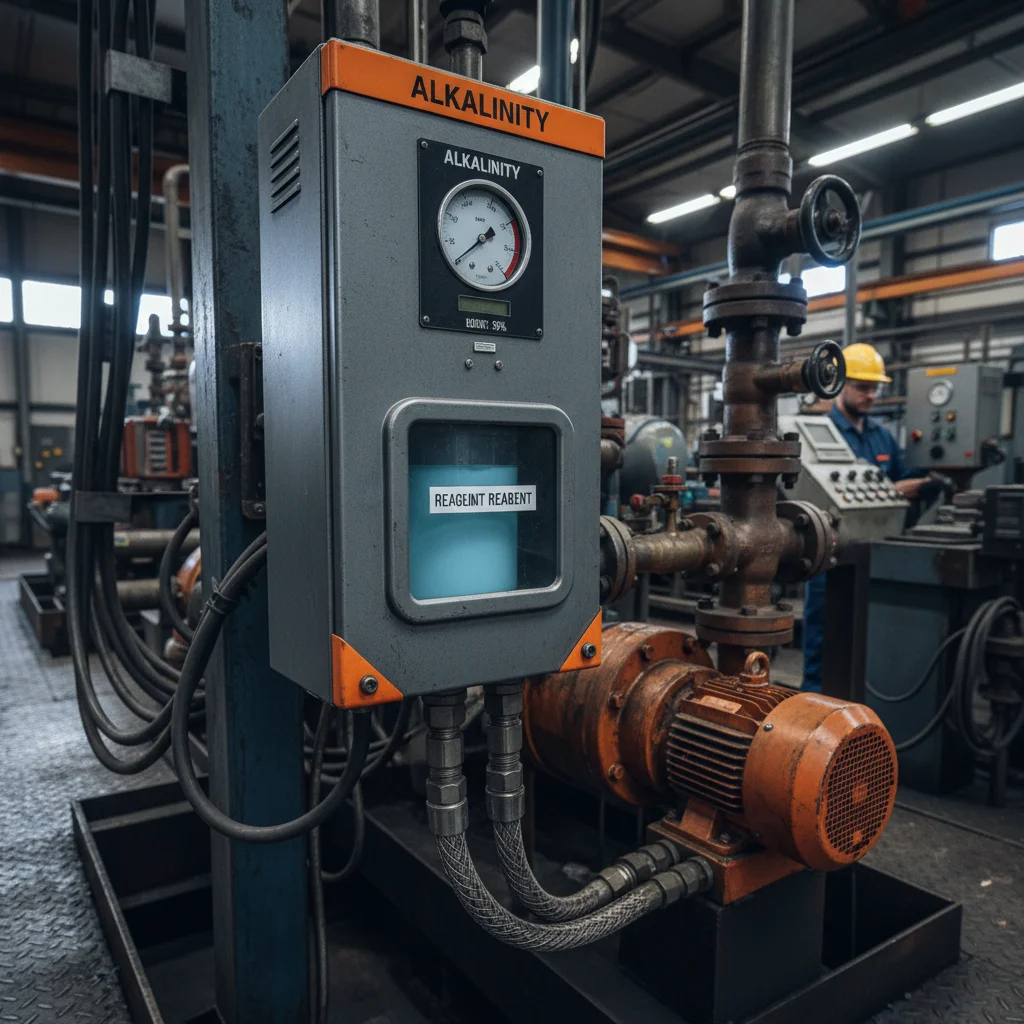
The precise measurement of mineral content in water is a cornerstone of industrial efficiency and environmental safety. Whether managing boiler feed water or monitoring wastewater discharge, the ability to accurately determine calcium and magnesium concentrations prevents costly scale buildup and ensures regulatory compliance. Understanding the chemistry behind water hardness is the first step toward implementing an effective water treatment strategy.
Across the globe, industries are shifting toward more automated and reliable monitoring systems to replace sporadic manual checks. The transition from traditional titration to continuous sensing allows for real-time adjustments in chemical dosing, reducing waste and enhancing the lifespan of expensive infrastructure. This evolution in water quality monitoring is critical for maintaining the integrity of high-pressure steam systems and cooling towers.
While advanced sensors provide the data, the validation of these systems often relies on a high-quality water hardness test reagent to ensure that the electronic readings remain calibrated and accurate. By combining continuous monitoring with periodic chemical verification, operators can achieve an unparalleled level of confidence in their water chemistry management.

The Global Significance of Water Hardness Monitoring
On a global scale, the management of water hardness is not merely a technical preference but a necessity for industrial survival. According to ISO standards for water quality, excessive mineral content can lead to catastrophic failures in heat exchangers and turbines, costing the global manufacturing sector billions in unplanned downtime and energy inefficiency.
The challenge lies in the variability of source water; a facility in one region may deal with soft rainwater, while another faces highly mineralized groundwater. This discrepancy necessitates a robust verification process using a water hardness test reagent to calibrate automated sensors and ensure that softening plants are operating at peak efficiency.
Defining Water Hardness and Reagent Chemistry
Water hardness is primarily defined as the concentration of multivalent cations, most notably calcium (Ca2+) and magnesium (Mg2+), dissolved in water. When these minerals interact with soaps or heat, they form insoluble precipitates known as scale, which restricts fluid flow and reduces thermal conductivity in industrial piping.
A water hardness test reagent acts as a chemical indicator that allows technicians to visualize the concentration of these minerals through a colorimetric change. Typically involving a chelating agent like EDTA, the reagent binds to the metal ions, shifting the color of the solution once all hardness ions have been complexed.
In modern industrial settings, these reagents provide the "ground truth" necessary to validate the readings of online sensors. While a conductivity sensor can indicate a change in total dissolved solids, it cannot differentiate between different types of ions, making the specific chemical reagent indispensable for precise hardness determination.
Core Components of Effective Hardness Testing
The effectiveness of a water hardness test reagent depends heavily on its stability and sensitivity. High-purity components ensure that the titration endpoint is sharp and easy to identify, which reduces human error during the testing process and ensures that the results are reproducible across different shifts of operators.
Another critical factor is the compatibility of the water hardness test reagent with the specific water matrix being tested. In industrial wastewater, the presence of heavy metals or interfering organic compounds can mask the endpoint, requiring specialized buffering agents to maintain the pH levels necessary for the indicator to function correctly.
Finally, the scalability of the testing method—from simple drop-count kits for field technicians to high-precision laboratory reagents—allows organizations to implement a tiered monitoring strategy. This ensures that high-risk areas are monitored with extreme precision while routine checks remain cost-effective.
Industrial Applications and Use Cases
In the power generation sector, the use of a water hardness test reagent is critical for monitoring the performance of ion-exchange resins in demineralizers. Even a slight breakthrough of hardness ions into the boiler feed water can cause rapid scaling on turbine blades, leading to a dangerous imbalance and potential mechanical failure.
Similarly, in the pharmaceutical and food and beverage industries, water hardness impacts the efficacy of cleaning-in-place (CIP) systems. Hard water reduces the effectiveness of detergents and can leave mineral deposits on sterilized surfaces, which may harbor bacteria and compromise product purity.
Comparison of Water Hardness Analysis Methods
Long-Term Value of Accurate Chemical Analysis
Investing in high-grade reagents and precise sensors yields significant long-term financial dividends. By preventing scale formation, facilities reduce their energy consumption—as scale acts as an insulator in heat exchangers—and extend the mean time between failures (MTBF) for pumps and valves.
Beyond the financial aspect, accurate monitoring promotes environmental sustainability. By knowing the exact hardness of the water, plants can optimize the use of softening chemicals, preventing the over-dosage of salts into the local ecosystem and reducing the overall chemical footprint of the facility.
Future Innovations in Water Quality Sensing
The future of water hardness monitoring is moving toward the complete integration of chemical reagents with microfluidic "Lab-on-a-Chip" technology. This will allow for the automated, on-site use of a water hardness test reagent within a closed-loop sensor system, providing the precision of titration with the convenience of a digital sensor.
Digital transformation is also introducing AI-driven predictive maintenance. By analyzing trends in hardness data, machine learning algorithms can predict when a softener resin bed is nearing exhaustion, triggering a regeneration cycle exactly when needed rather than on a fixed timer.
Furthermore, the industry is seeing a shift toward "green chemistry" reagents. New, biodegradable indicators are being developed to replace traditional dyes, ensuring that the process of testing water quality does not contribute to the pollution of the very resources being monitored.
Overcoming Common Challenges in Hardness Testing
One of the most common challenges in utilizing a water hardness test reagent is the "interference effect," where ions like iron or manganese create false positives. Expert technicians overcome this by using masking agents that selectively bind to interfering ions, allowing the reagent to focus solely on calcium and magnesium.
Another hurdle is the degradation of reagents due to improper storage. Exposure to light and air can oxidize sensitive indicators, leading to drift in results. The solution involves utilizing amber-glass storage and climate-controlled environments to maintain chemical potency.
Finally, the gap between manual testing and automated sensing can lead to conflicting data. The best approach is to establish a rigorous cross-validation protocol where automated sensor readings are verified daily against a manual titration using a certified water hardness test reagent.
Comparative Analysis of Water Hardness Testing Frameworks
| Testing Method |
Precision Level |
Response Time |
Operational Cost |
| EDTA Titration |
Very High |
Moderate |
Low |
| Online Conductivity |
Moderate |
Instant |
Medium |
| Colorimetric Strips |
Low |
Fast |
Very Low |
| Automated Analyzers |
High |
Fast |
High |
| ICP-MS Laboratory |
Extreme |
Slow |
Very High |
| Digital Potentiometry |
High |
Moderate |
Medium |
FAQS
For critical industrial systems, we recommend a daily cross-check. In less volatile environments, a weekly calibration is typically sufficient. Regular verification ensures that sensor drift—caused by fouling or temperature changes—is corrected, maintaining the accuracy of your automated dosing systems.
Yes, standard EDTA-based reagents measure total hardness, which is the sum of both temporary (carbonate) and permanent (non-carbonate) hardness. To distinguish between the two, you would typically perform a second test after boiling the sample or adjusting the pH.
Conductivity meters measure all dissolved ions (including sodium, chlorides, and sulfates), whereas a water hardness test reagent specifically targets calcium and magnesium. If your water has high salinity but low hardness, the conductivity will be high while the hardness test will be low.
The color change occurs due to a metal-ion indicator. The indicator initially binds to the hardness ions, creating one color. As you add the chelating agent (like EDTA), the agent steals the ions from the indicator. Once all ions are captured by the EDTA, the indicator returns to its free state, triggering the color shift.
Store reagents in their original amber bottles to protect them from UV degradation. Keep them in a cool, dry area away from direct sunlight and strong acids. Ensure caps are tightly sealed after every use to prevent evaporation and atmospheric contamination.
Yes, the industry is moving toward enzymatic indicators and non-toxic organic dyes. Additionally, combining these with high-precision digital sensors allows facilities to reduce the total volume of chemicals used for testing, aligning with green manufacturing goals.
Conclusion
Maintaining precise control over water mineral content is essential for the longevity of industrial assets and the efficiency of water treatment processes. By integrating continuous electronic monitoring with the rigorous validation provided by a high-quality water hardness test reagent, operators can eliminate the guesswork from their water chemistry management, preventing scale and corrosion before they become costly problems.
As we move toward an era of Industry 4.0, the synergy between chemical analysis and digital sensing will only grow. We encourage facility managers to adopt a hybrid approach—combining the speed of automated sensors with the undeniable accuracy of reagent-based testing—to ensure a sustainable, efficient, and reliable water management infrastructure. Visit our website for more professional solutions: www.jensprima.com













































































 Download
 Video Center
 Technical Services
 FAQS
 Service Network
 Privacy Policy
 Contact Us