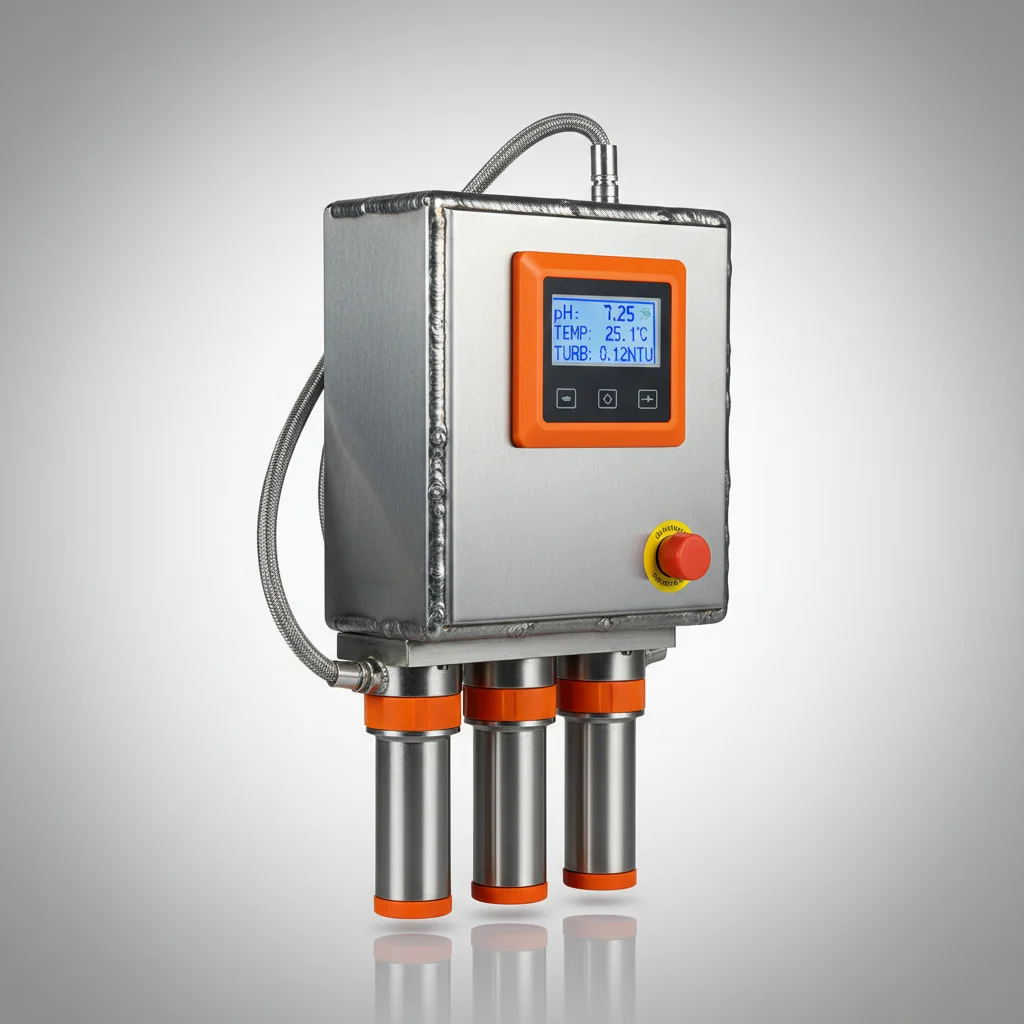
Maintaining precise pH levels is a cornerstone of modern industrial chemistry and environmental stewardship, where the stability of aqueous solutions determines the success of a biological or chemical process. The integration of an automatic ph controller allows facilities to move beyond manual sampling, reducing human error and ensuring that acidic or alkaline shifts are corrected in real-time to prevent equipment corrosion or batch failure.
Globally, the demand for high-precision sensing is driven by tightening environmental regulations and the need for resource efficiency. Whether in wastewater treatment or pharmaceutical synthesis, the ability to automate the feedback loop between a sensor—such as the pH Sensor innoSens 150T—and a dosing pump is essential for maintaining operational safety and compliance with ISO standards.
Understanding the synergy between advanced sensing technology and the logic of an automatic ph controller is key to optimizing yield and minimizing chemical waste. By leveraging high-stability electrodes and intelligent control algorithms, industries can achieve a level of precision that protects both the environment and the bottom line.

Global Relevance of pH Automation
The global industrial landscape is currently facing a dual challenge: the need to increase production capacity while drastically reducing environmental footprints. In this context, the implementation of an automatic ph controller is no longer a luxury but a regulatory necessity. According to international environmental guidelines, uncontrolled discharge of pH-imbalanced water can lead to catastrophic failures in local aquatic ecosystems and severe legal penalties for manufacturers.
By automating the monitoring and adjustment process, companies can ensure that their effluent remains within the narrow margins required by law. This automation reduces the reliance on manual labor and eliminates the inherent delays found in laboratory-based testing, allowing for immediate response to chemical spikes.
Defining the Automatic pH Control System
An automatic ph controller is an integrated system consisting of a sensing element, a signal processor (controller), and an actuator (such as a dosing pump). Its primary function is to maintain the pH value of a liquid at a specific setpoint by automatically adding acid or base reagents based on real-time data provided by sensors like the innoSens 150T.
In modern industry, this system acts as the "brain" of the water treatment process. It translates the millivolt signal from the pH sensor into a readable pH value and compares it against the desired target. If a deviation is detected, the controller triggers the dosing equipment to bring the solution back to equilibrium.
This connection to humanitarian needs is evident in clean water initiatives. By ensuring the correct pH in drinking water treatment, these systems prevent lead leaching from old pipes and ensure the efficacy of disinfection processes, directly impacting public health in urban and remote areas alike.
Core Components of Precise pH Monitoring
The effectiveness of an automatic ph controller begins with sensor durability. Sensors must withstand harsh chemical environments, temperature fluctuations, and fouling. Using a high-quality pH sensor ensures that the signal sent to the controller is accurate and stable over long periods.
Scalability is another critical factor. A robust automatic ph controller should be capable of integrating into a larger SCADA system, allowing operators to monitor multiple tanks or streams from a centralized control room. This allows for the synchronization of pH control across an entire plant.
Finally, cost efficiency is achieved through the reduction of reagent waste. Precision control means that chemicals are added in the exact quantities required, preventing the "over-shooting" common in manual adjustments, which often requires adding a second chemical to correct the first mistake.
Performance Metrics in Industrial pH Control
When evaluating the performance of an automatic ph controller, engineers focus on response time and hysteresis. Response time refers to how quickly the sensor detects a change and the controller initiates a correction. Lower latency prevents dangerous pH swings in sensitive chemical reactors.
Hysteresis, or the "dead band," is the range around the setpoint where no action is taken. Setting this correctly is vital to prevent the dosing pumps from "hunting" or cycling on and off too rapidly, which would lead to premature wear of the mechanical components.
Efficiency Comparison of pH Control Methods
Global Applications and Use Cases
In the pharmaceutical industry, an automatic ph controller is indispensable for bioreactors. The growth of cell cultures and the stability of proteins are extremely sensitive to pH changes; even a deviation of 0.1 pH units can ruin a multi-million dollar batch of medicine.
In remote industrial zones, such as mining operations in South America or Southeast Asia, these controllers are used in tailings ponds. By automating the neutralization of acidic mine drainage, companies prevent heavy metals from leaching into the groundwater, protecting local communities and biodiversity.
Long-Term Value and Sustainability
The transition to an automatic ph controller provides tangible economic benefits. By optimizing chemical consumption, plants report a significant reduction in OpEx. Furthermore, the reliability of automated systems reduces the risk of catastrophic spills, which can cost millions in cleanup and legal fees.
From a sustainability perspective, precise pH control reduces the salinity and chemical load of discharged water. This supports the "Circular Economy" by making treated wastewater more suitable for reuse in irrigation or industrial cooling, thereby reducing the overall freshwater withdrawal from the environment.
Beyond the numbers, there is an element of trust and safety. Operators can work with the confidence that the system is monitoring the process 24/7, removing the anxiety associated with manual sampling in hazardous environments and ensuring a safer workspace for all personnel.
Future Trends in Water Quality Automation
The next generation of the automatic ph controller is moving toward "Predictive Control." By utilizing machine learning algorithms, controllers will be able to predict pH shifts based on upstream flow rates and composition changes, adjusting dosing before the pH actually drifts.
Digital transformation is also bringing the "Internet of Things" (IoT) to water quality. Sensors will soon be able to perform self-calibration and alert technicians via mobile apps when the electrode slope decreases, drastically reducing the need for manual maintenance trips to remote sites.
Furthermore, there is a shift toward green chemistry, where controllers are optimized to work with more eco-friendly neutralizing agents. The integration of these systems with renewable energy sources, such as solar-powered monitoring stations, will further decouple industrial growth from environmental degradation.
Comparison of pH Control Technologies for Industrial Scaling
| Technology Level |
Response Speed |
Maintenance Need |
Reliability Score |
| Manual Sampling |
Very Slow |
High (Labor) |
4/10 |
| Basic On/Off Control |
Moderate |
Medium |
6/10 |
| PID Controller |
Fast |
Low |
8/10 |
| Smart IoT Control |
Real-time |
Very Low |
9/10 |
| Predictive AI Control |
Proactive |
Automated |
10/10 |
| Hybrid Systems |
Fast |
Medium |
8/10 |
FAQS
The primary advantage is the elimination of the "time lag" between sampling and correction. An automatic ph controller provides continuous, real-time monitoring, ensuring that any deviation from the setpoint is corrected immediately. This prevents batch loss in pharmaceuticals and avoids regulatory fines in wastewater management, while also reducing the labor costs associated with manual sampling.
Calibration frequency depends on the fluid's aggressiveness and the sensor type. For high-precision applications using sensors like the innoSens 150T, weekly or bi-weekly calibration is standard. However, many modern automatic ph controllers feature "stability alerts" that notify operators when the sensor slope has drifted, allowing for calibration based on actual performance rather than a fixed schedule.
Yes, provided the sensor and housing are made from compatible materials. Most industrial-grade automatic ph controllers are paired with sensors featuring chemically resistant glass and robust bodies (like PVDF or PTFE) to ensure they can operate in harsh acidic or alkaline environments without degrading.
Absolutely. Most professional automatic ph controllers support standard industrial communication protocols such as 4-20mA analog outputs, Modbus RS485, or Profibus. This allows the pH data to be streamed directly to a central control room for remote monitoring, data logging, and integrated alarm management.
High-quality automatic ph controllers include "fail-safe" mechanisms. If the sensor signal goes out of range or fails, the controller can be programmed to shut down dosing pumps immediately and trigger an emergency alarm, preventing the system from adding excessive chemicals to the process.
This is achieved through PID (Proportional-Integral-Derivative) control. Instead of just turning the pump on or off, a PID-based automatic ph controller slows down the dosing rate as the pH approaches the target setpoint, ensuring a smooth transition and avoiding the oscillating "see-saw" effect of basic controllers.
Conclusion
In summary, the implementation of an automatic ph controller is a critical investment for any industrial operation where water chemistry impacts quality, safety, or compliance. By combining high-performance sensors like the innoSens 150T with intelligent control logic, facilities can achieve unparalleled precision, reduce chemical waste, and ensure an environmentally sustainable footprint.
Looking forward, the integration of AI and IoT will further refine pH management, moving the industry toward a proactive, self-healing infrastructure. We encourage plant managers and engineers to evaluate their current monitoring gaps and transition toward automated solutions to secure long-term operational resilience. Visit our website: www.jensprima.com













































































 Download
 Video Center
 Technical Services
 FAQS
 Service Network
 Privacy Policy
 Contact Us