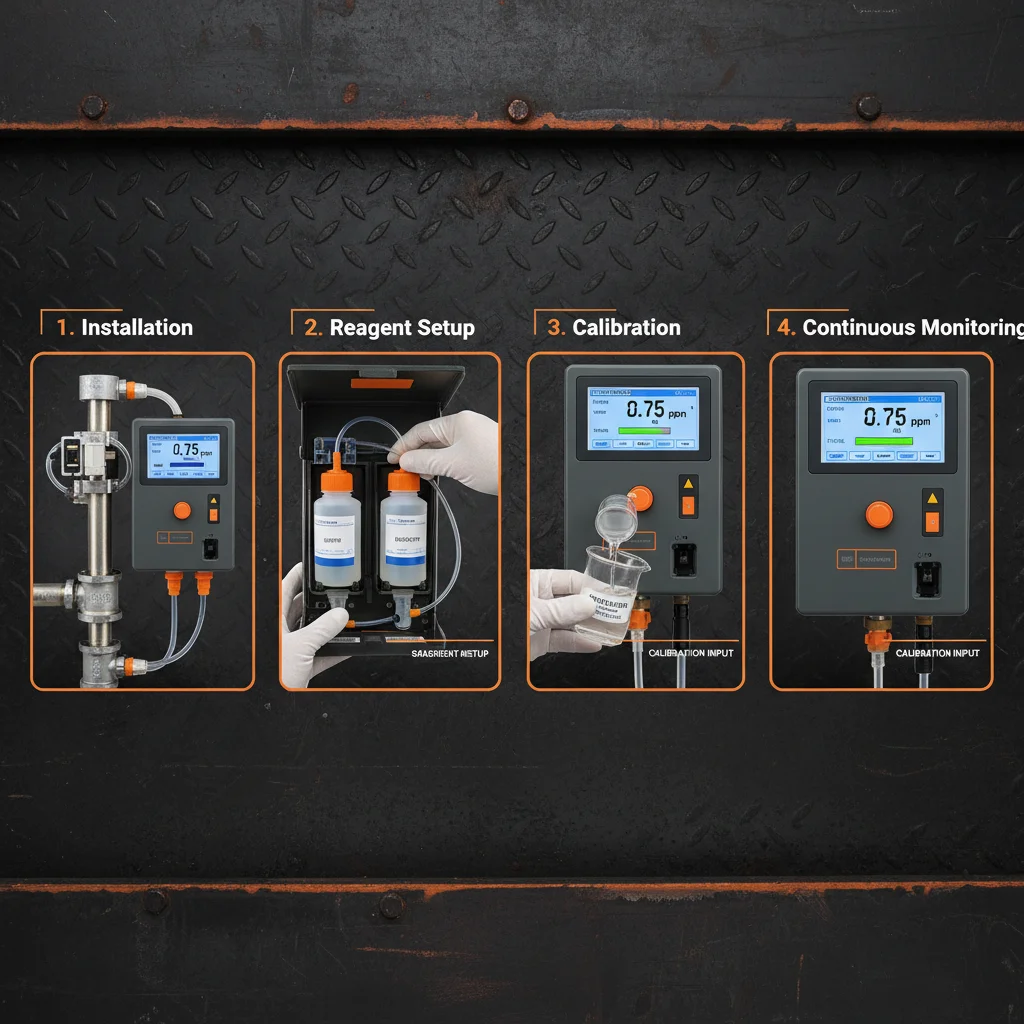
Maintaining precise water quality control is fundamental to industrial efficiency and environmental stewardship. In many water treatment and cooling systems, the accumulation of calcium and magnesium ions leads to scaling, which can severely degrade equipment performance and increase operational costs. This is where the precise application of a total hardness reagent becomes critical, allowing operators to quantify mineral content and implement effective softening strategies.
Globally, the demand for high-purity water in pharmaceuticals, power generation, and semiconductor manufacturing has escalated. Failure to monitor hardness levels can lead to catastrophic boiler failure or contaminate sensitive production lines. Utilizing a professional-grade total hardness reagent ensures that the chemical balance of the water is maintained within strict tolerances, mitigating the risk of mineral buildup in heat exchangers and piping.
For those managing complex aquatic environments, the transition from manual titration to automated online analysis is a game-changer. By integrating a high-quality total hardness reagent into an automated analyzer, industries can achieve real-time monitoring and immediate adjustment of dosing pumps, ensuring consistent water quality and extending the lifespan of expensive infrastructure.

Global Relevance of Hardness Monitoring
Water hardness is a global challenge affecting billions of people and countless industrial processes. According to ISO standards and environmental guidelines, the presence of dissolved divalent metallic ions, primarily calcium and magnesium, can create significant operational hurdles. Without the consistent use of a total hardness reagent to monitor these levels, the risk of "hard water" causing scale precipitation in industrial boilers and cooling towers remains dangerously high.
In many developing regions and high-output industrial zones, the lack of precise chemical monitoring leads to premature equipment failure and inefficient energy use. The implementation of rigorous hardness testing protocols allows for the optimization of ion-exchange resins and reverse osmosis membranes, directly contributing to lower carbon footprints and reduced chemical waste in water treatment plants.
Defining the Total Hardness Reagent
A total hardness reagent is a specialized chemical solution used to detect and quantify the concentration of calcium and magnesium ions in a water sample. Typically utilized in complexometric titration or automated photometric analysis, these reagents interact with the hardness ions to produce a measurable change—usually a color shift—that indicates the total mineral content.
In the context of modern industrial manufacturing, these reagents are not merely lab chemicals but are the "sensory organs" of an online water quality analyzer. By reacting predictably with the sample, the reagent enables a controller to determine exactly how much softener or sequestering agent must be added to the system to prevent scale formation.
From a humanitarian perspective, ensuring the quality of drinking water in remote areas often relies on these simple yet powerful reagents. They provide a reliable method for field technicians to assess water quality and ensure that softening processes are effective, thereby protecting the health of the population and the integrity of local infrastructure.
Core Components and Chemical Stability
The efficacy of a total hardness reagent depends heavily on its chemical purity and stability. High-quality reagents are formulated to resist degradation over time, ensuring that the colorimetric response remains consistent even in varying ambient temperatures. This stability is paramount for online analyzers that operate 24/7 without manual calibration.
One of the critical aspects is the selection of the chelating agent, often EDTA, and the specific indicator used to trigger the color change. A premium total hardness reagent is optimized to minimize interference from other ions like iron or manganese, which can otherwise lead to false-positive readings and incorrect dosing of water treatment chemicals.
Furthermore, the pH buffering capacity of the reagent is essential. Since the reaction between the hardness ions and the chelator is pH-dependent, the reagent must maintain a stable alkaline environment. This ensure that the total hardness reagent provides a linear and accurate response across a wide range of concentrations, from soft distilled water to heavily mineralized industrial brine.
Practical Application Factors
When selecting a total hardness reagent for industrial use, operators must consider several practical factors to ensure long-term reliability. Compatibility with the analyzer's pumping system is crucial; the reagent must not precipitate or clog the tubing. Additionally, the shelf life of the chemical determines the frequency of reagent replacement and the overall maintenance overhead of the monitoring system.
Scalability is another key consideration. In large-scale power plants, the volume of reagent consumed can be significant. Therefore, the balance between chemical concentration and cost-efficiency is vital. High-concentration reagents reduce the frequency of refills, while high-purity formulations reduce the need for frequent recalibration of the sensors.
Comparison of Total Hardness Reagent Performance Metrics
Industrial Use Cases and Global Reach
In the energy sector, specifically in combined cycle power plants, the use of a total hardness reagent is non-negotiable. Even a slight increase in hardness can lead to scale deposition on turbine blades, reducing thermal efficiency and increasing the risk of catastrophic failure. Automated monitoring systems in these facilities use high-precision reagents to ensure the water is virtually mineral-free before it enters the boiler.
Beyond power plants, the pharmaceutical industry utilizes these reagents to validate the performance of Water-for-Injection (WFI) systems. In these high-stakes environments, any deviation in water hardness can affect the stability of the drug formulation. Consequently, a standardized total hardness reagent is used to perform periodic verification tests, ensuring that the purification chain is operating at peak efficiency.
Long-Term Value and Sustainability
The long-term value of investing in a high-quality total hardness reagent extends far beyond the cost of the chemical itself. By enabling precise dosing of water softeners, industries can significantly reduce the amount of salt and other chemicals discharged into the environment. This shift toward "precision dosing" is a cornerstone of sustainable industrial water management.
Furthermore, the reliability provided by consistent monitoring builds trust within the operational team. When an analyzer provides an accurate reading thanks to a stable reagent, plant managers can make informed decisions about when to regenerate ion-exchange beds, avoiding unnecessary downtime and extending the life of the resins.
From a financial perspective, the prevention of scale-related energy losses is a massive cost-saver. A thin layer of scale can increase fuel consumption by 5-10% in industrial boilers. Thus, the small recurring cost of a total hardness reagent translates into millions of dollars in energy savings over the lifecycle of a plant.
Future Trends in Reagent Technology
The future of hardness monitoring is moving toward "green chemistry." Research is currently focused on developing a total hardness reagent that is biodegradable and free of toxic precursors, reducing the environmental impact of the waste stream produced by online analyzers. This aligns with the global push toward circular economy principles in water treatment.
Digital transformation is also playing a role. We are seeing the integration of AI-driven predictive maintenance where the reagent consumption rate is monitored to predict when the analyzer requires service. By analyzing the depletion patterns of the total hardness reagent, the system can alert operators to leaks or pump failures before they result in a loss of monitoring.
Additionally, the move toward miniaturization is leading to the development of microfluidic analyzers. These devices require extremely concentrated and stable reagents to operate in tiny volumes, pushing the boundaries of chemical formulation to ensure that accuracy is maintained even at the microliter scale.
Analysis of Total Hardness Reagent Application Across Different Industries
| Industry Sector |
Criticality Level |
Primary Goal |
Reagent Requirement |
| Power Generation |
Ultra-High |
Boiler Scale Prevention |
Extreme Accuracy |
| Pharmaceuticals |
High |
Product Purity |
Low Interference |
| Textile Dyeing |
Medium |
Color Consistency |
Cost-Effectiveness |
| Municipal Water |
Medium |
Public Health Standards |
High Stability |
| Semiconductors |
Ultra-High |
Wafer Contamination Control |
Ultra-Pure Grade |
| Food & Beverage |
High |
Taste & Texture Quality |
Consistent Response |
FAQS
A total hardness reagent measures the combined concentration of both calcium (Ca2+) and magnesium (Mg2+) ions in the water. In contrast, a calcium-specific reagent is designed to only react with calcium ions, usually by shifting the pH to a level where magnesium does not interfere. For most scale prevention strategies, monitoring total hardness is the primary requirement.
Replacement frequency depends on the sample flow rate and the stability of the reagent. Generally, we recommend replacing the reagent every 3 to 6 months to prevent degradation. However, if you notice a drift in calibration or a decrease in color intensity, the reagent should be replaced immediately to maintain measurement accuracy.
Yes, certain heavy metals like iron or copper can interfere with the chelating process, potentially leading to slightly higher readings. Professional-grade reagents are formulated with masking agents to minimize this effect. If your water source is known to be high in transition metals, we recommend using a reagent specifically optimized for complex industrial matrices.
To ensure maximum stability, reagents should be stored in a cool, dry place, away from direct sunlight and extreme temperature fluctuations. Most reagents are supplied in opaque bottles to protect them from UV degradation. Keeping the containers tightly sealed when not in use prevents evaporation and contamination from the air.
While the basic chemistry of total hardness reagents is similar, the concentration and viscosity can vary. It is essential to use the reagent specified by the manufacturer of your analyzer (e.g., the TH5000 or TH5100 series) to ensure that the pump calibrations and photometric readings are aligned with the instrument's internal logic.
Standard total hardness reagents are designed for freshwater and industrial process water. In very high-salinity environments (like seawater), the ionic strength can interfere with the colorimetric reaction. For such applications, a diluted sample or a specialized reagent formulation for high-salinity matrices is required to maintain accuracy.
Conclusion
The role of a total hardness reagent in industrial water management cannot be overstated. By providing a reliable and precise method for quantifying calcium and magnesium levels, these reagents enable the prevention of scale buildup, the protection of critical machinery, and the optimization of chemical usage. From power plants to pharmaceutical labs, the ability to maintain strict control over water hardness is a fundamental driver of operational reliability and sustainability.
As the industry moves toward more automated and environmentally friendly solutions, the demand for stable, high-purity reagents will continue to grow. We recommend that operators transition to online monitoring systems to move from reactive to proactive water management. For high-performance reagents and professional water analysis solutions, visit our website: www.jensprima.com













































































 Download
 Video Center
 Technical Services
 FAQS
 Service Network
 Privacy Policy
 Contact Us