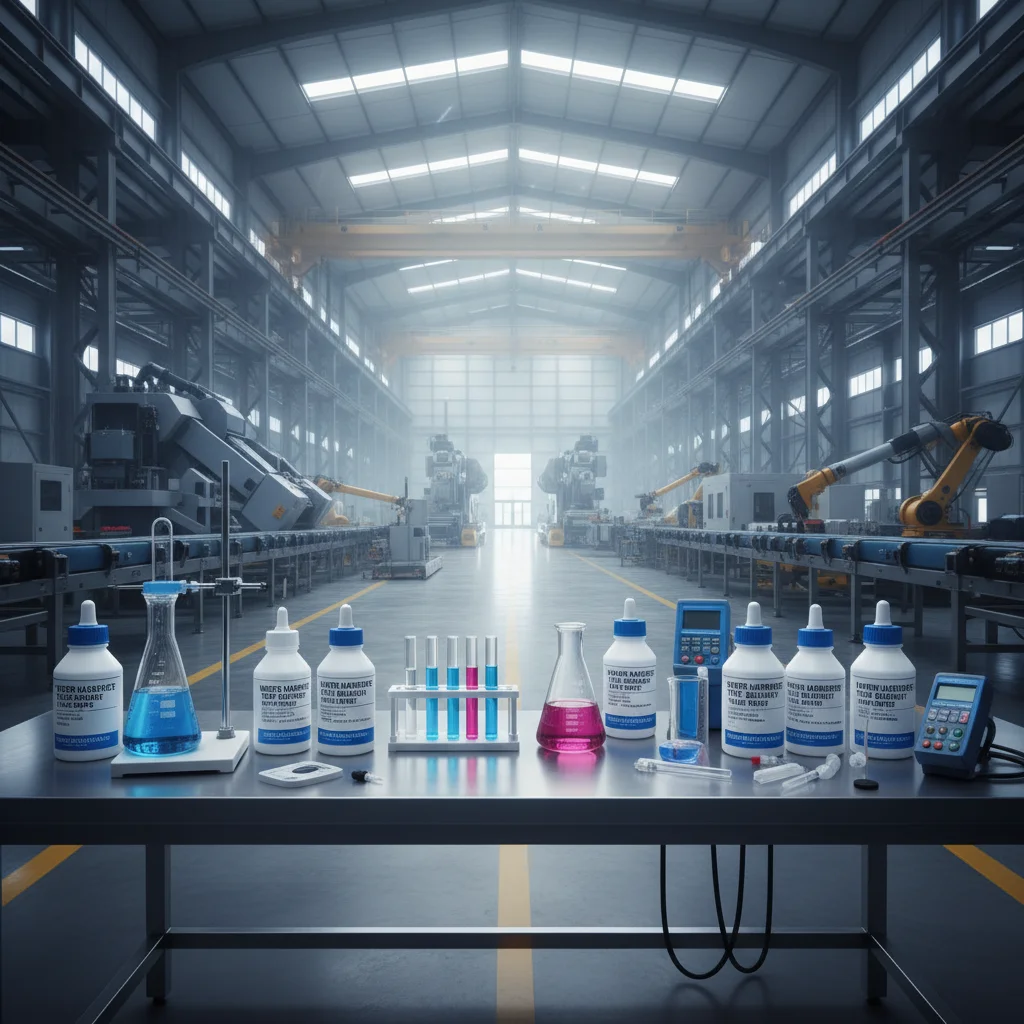
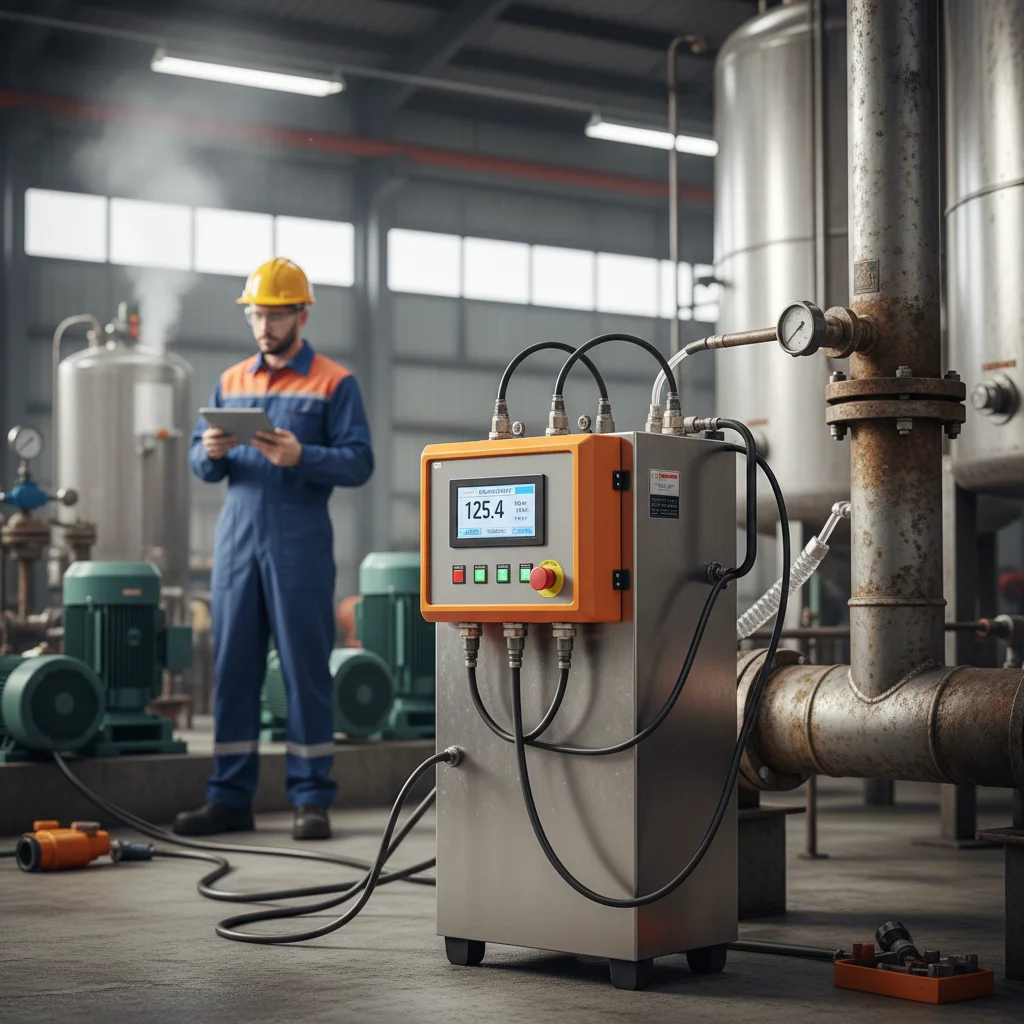
Jensprima online hardness and residual chlorine analyzers play a vital role in the service life of reverse osmosis membranes and the water recovery rate within pharmaceutical RO systems.
Get high-precision NH4-N and NO3-N monitoring with the Flumsys 10TC-I. As leading China suppliers and factory, we provide digital controllers for water treatment supporting JENSPRIMA sensors for industrial compliance.
The Flumsys 10TC-I is a high-performance NH₄-N and NO₃-N Controller engineered for precision monitoring of ammonia nitrogen and nitrate nitrogen in demanding industrial and environmental water quality applications. Designed to interface seamlessly with specialized sensors, this controller ensures rigorous compliance with discharge standards and optimizes chemical dosing in wastewater treatment plants.
By integrating advanced signal processing and a user-centric interface, the 10TC-I provides real-time analytical data, allowing operators to maintain optimal nutrient levels and prevent eutrophication in receiving water bodies. Its robust construction is specifically tailored for the rigorous demands of online water quality analysis, ensuring long-term stability and reliability.

| Product Model | Flumsys 10TC-I | Parameter Range | Ammonia / Nitrate Nitrogen |
|---|---|---|---|
| Input Signal | Sensor Compatible | Output Signal | 4-20mA / RS485 Modbus |
| Display Type | Digital LED/LCD | Power Supply | 110/220V AC |
| Measurement Mode | Continuous Online | Calibration | Automatic/Manual |
| Protection Class | IP65/NEMA 4X | Mounting Type | Wall/Panel Mount |
Built with corrosion-resistant materials to withstand harsh chemical environments in wastewater facilities.
Provides instantaneous data updates for rapid response to nutrient spikes in water streams.
Advanced algorithms minimize interference, delivering accurate NH₄-N and NO₃-N concentration readings.
Easy-to-read display and simplified menu navigation for efficient on-site configuration.
Standardized output protocols allow easy connection to PLC and SCADA management systems.
Designed for stability with extended calibration intervals, reducing operational overhead.
Archive historical nutrient data for trend analysis and regulatory reporting.
Trigger chemical pumps automatically based on real-time nitrogen concentration.
Instant alerts via SMS or Email when parameters exceed predefined safety limits.
Sync multiple 10TC-I controllers into a single centralized dashboard.
Secure cloud-based access for remote monitoring and diagnostics anywhere.
Digital tracking of sensor health and scheduled calibration reminders.
| Metric | Traditional Manual Testing | Flumsys 10TC-I Online System |
|---|---|---|
| Labor Cost | High (Daily Sampling) | Very Low (Automated) |
| Response Time | Hours/Days (Lab Delay) | Seconds (Real-time) |
| Chemical Waste | High (Reagent-based) | Minimal (Optimized) |
| Data Accuracy | Prone to Human Error | Consistent Digital Precision |
| Compliance Risk | High (Sampling Gaps) | Low (Continuous Audit Trail) |
NH₄-N (Ammonia Nitrogen) typically indicates recent pollution or early-stage nitrification, while NO₃-N (Nitrate Nitrogen) is the end product of nitrification. Monitoring both allows for complete oversight of the nitrogen cycle in water treatment.
Yes, the Flumsys 10TC-I supports standard industrial outputs including 4-20mA analog signals and RS485 Modbus communication, making it compatible with most modern PLC and SCADA systems.
Depending on the water quality and flow rate, calibration is typically recommended every 2 to 4 weeks to ensure maximum accuracy, though the controller simplifies this process via guided menus.
The controller is designed for wide versatility; however, for high-salinity environments, we recommend pairing it with a specialized ion-selective electrode (ISE) sensor designed for high-ionic strength water.
The 10TC-I features built-in fault detection. If the sensor signal is interrupted, the controller will trigger a system alarm and can be configured to send a failure signal to the central management platform.
Absolutely. By providing continuous monitoring and precise control of Nitrogen levels, it helps plants avoid exceeding regulatory limits and prevents costly environmental fines.